


How Soft Serve Is Becoming a Category Anchor for Independent Foodservice
This article has been produced and shared by WaferLtd.
In 2026, independent foodservice operators are looking for more than trending products – they are looking for dependable revenue drivers. Soft serve is increasingly becoming that category anchor.
With strong consumer familiarity, broad menu versatility and consistent margin performance, soft serve offers operators a low-risk, high-return opportunity. However, as expectations rise around dietary flexibility, operational simplicity and product reliability, the format must evolve to remain commercially relevant.
At Wafer, we believe soft serve is no longer simply a dessert option – it is a strategic growth tool.
A Category Built on Reliability
Soft serve continues to perform because it delivers across multiple operational and consumer touchpoints:
- Strong impulse purchase appeal
- Cross-category compatibility (desserts, milkshakes, sundaes and toppings)
- Clear perceived value
- Low ingredient complexity
- Scalable portion control
- Strong gross margin return
For independent operators navigating labour pressures, rising costs and increasing competition, the ability to offer a versatile, high-margin menu item from a single base mix is commercially compelling.
Soft serve’s strength lies in its predictability. It performs during peak tourist periods, sells consistently in warm weather and can be refreshed with seasonal flavours and toppings to maintain momentum throughout the year. For many outlets, it is not just a product – it is a foundation category that supports repeat spend and impulse purchase behaviour.
Designed for Modern Foodservice
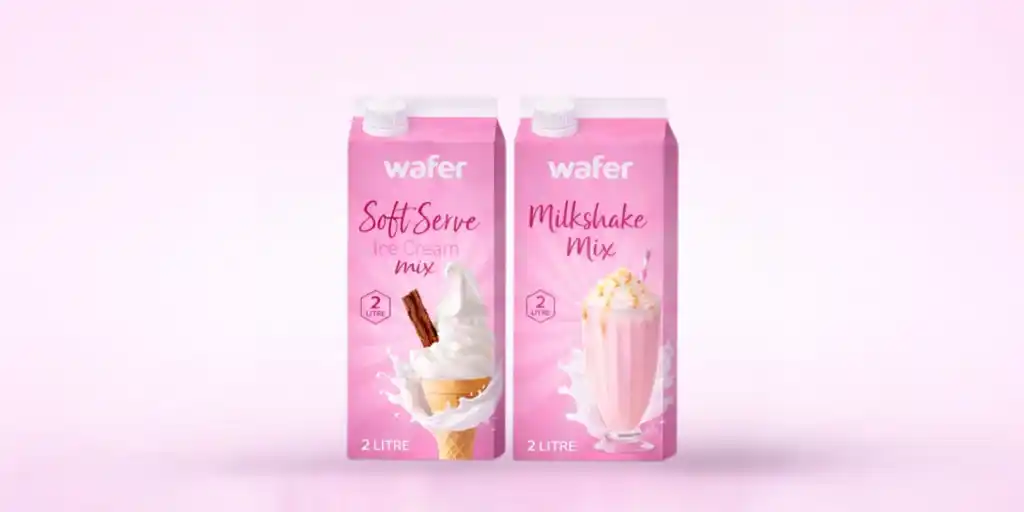
Wafer’s new Soft Serve & Milkshake Mix has been developed specifically with modern foodservice environments in mind.
With a smooth, creamy texture and enhanced slow-melt performance, the mix is designed to maintain structure and visual appeal during busy trading periods. This is particularly important in high-footfall environments such as seafront locations, leisure attractions, events and quick-service counters.
Slow-melt performance delivers measurable commercial advantages:
- Improved customer experience with reduced dripping
- Less product waste
- Greater consistency during peak service
- Stronger presentation in warmer conditions
Reliability during service is critical – particularly for operators working with limited staff or high turnover. A product that holds its structure supports speed, efficiency and profitability.
Crucially, the mix is gluten free and suitable for both soft serve and milkshake applications. In today’s market, dietary awareness continues to grow. Offering a gluten-free solution allows operators to widen accessibility without adding complexity to the back of house.
For wholesalers and distributors, this creates a clear commercial story: one base product that supports operational efficiency, inclusivity and margin stability.

Simplifying the Offer, Strengthening the Margin
Operational efficiency now sits alongside product appeal as a key purchasing driver. By offering one base mix that supports both soft serve and milkshake formats, operators can:
- Reduce stockholding complexity
- Minimise waste
- Improve speed of service
- Maximise equipment utilisation
- Maintain consistent portion control
This simplified model reduces procurement pressure while expanding menu versatility. It allows operators to deliver a consistent, high-quality offer without increasing SKU count.
From a wholesale perspective, this represents a strong value proposition. Dual-application products increase reorder frequency, support pallet volume growth and strengthen long-term customer retention.
For distributors, category anchors are invaluable — and soft serve continues to demonstrate its value in this role.
Supporting Independent Growth
Independent foodservice businesses require more than product supply – they require dependable partnerships. Margin clarity, operational simplicity and supply reliability are now central to buying decisions.
As the market evolves, products that combine performance, accessibility and efficiency will outperform trend-led alternatives.
Soft serve, particularly when supported by enhanced slow-melt performance and gluten-free credentials, provides operators with a stable, scalable revenue stream that works across seasons and service environments.
In 2026, growth will not come from complexity.
It will come from reliable, repeatable, margin-positive categories.
Soft serve is one of them.