

This article has been produced and shared by Nestle Confectionery.
Nestlé Confectionery doubles down on sustainability, but what does it mean for retailers?
Sustainability continues to move from a brand-led narrative to a commercial reality on shelf, and Nestlé Confectionery’s latest update shows just how embedded it has become across the value chain. From cocoa sourcing through to packaging and logistics, the supplier is positioning its sustainability strategy not just as a future ambition, but as an expectation for both retailers and shoppers.
At the heart of the approach is a focus on regenerative food systems, with long-term investment in cocoa, dairy and arable supply chains. Nestlé has been working with certified cocoa in the UK and Ireland since 2015, supported by its Cocoa Plan, which has been in place since 2009. More recently, initiatives such as the Cocoa Income Accelerator Programme aim to improve farmer livelihoods while strengthening traceability across the supply chain. With shoppers increasingly looking for reassurance on sourcing, this is beneficial to retailers as they can provide products that match their values.
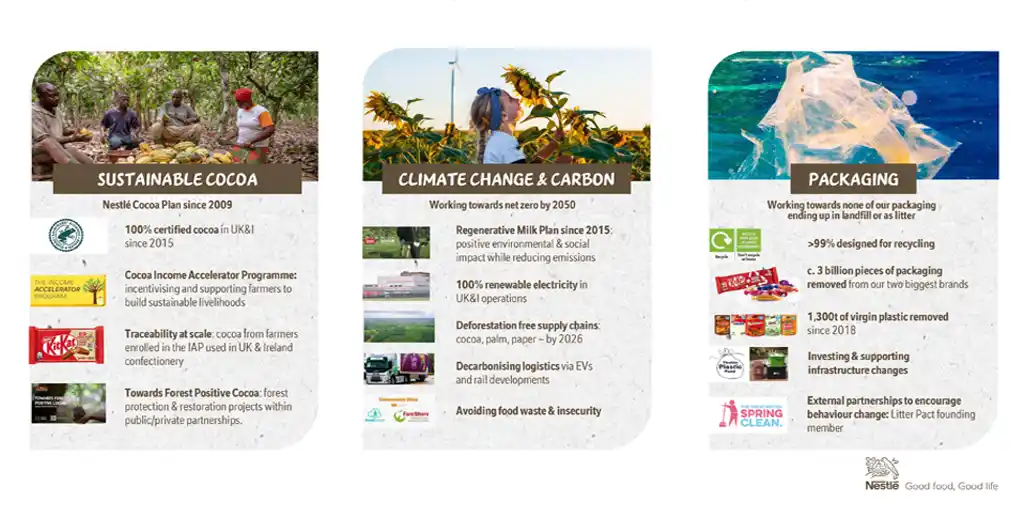
Alongside agriculture, carbon reduction is another clear priority. Nestlé is working towards net zero by 2050, with many steps already in place, including 100% renewable electricity across UK and Ireland operations and a shift towards lower-emission logistics, such as EVs and rail. For convenience and grocery operators, these changes are becoming part of wider Environmental, Social, and Governance (ESG) expectations, particularly as larger retailers push sustainability standards further down the supply chain.
Packaging remains one of the most visible areas of progress. Nestlé reports that over 99% of its packaging is now designed for recycling, alongside the removal of around 3 billion pieces of packaging from key brands and over 1,300 tonnes of virgin plastic since 2018 . This is significant in a category where single-serve formats dominate.
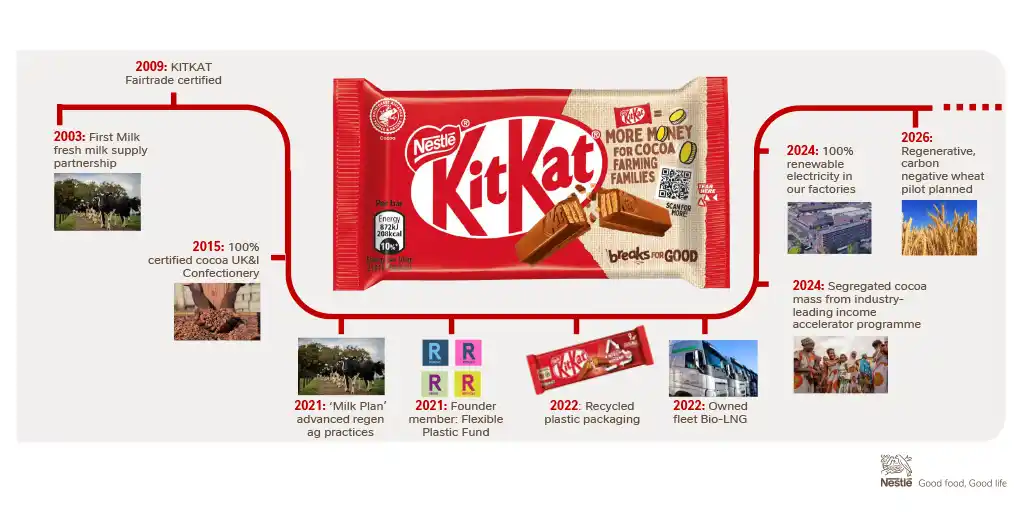
What stands out is the pace of change. The timeline outlined in the update shows a steady progression, from early Fairtrade certification of KitKat in 2009 through to more recent milestones such as renewable energy adoption in 2024 and plans for regenerative, carbon-negative wheat pilots by 2026. This long-term consistency helps build credibility, something increasingly important as shoppers become more sceptical of green claims.
In a category driven by impulse, price and brand recognition, sustainability might not always be the primary purchase driver. However, it is fast becoming a key differentiator, and one that can strengthen shopper trust over time.