

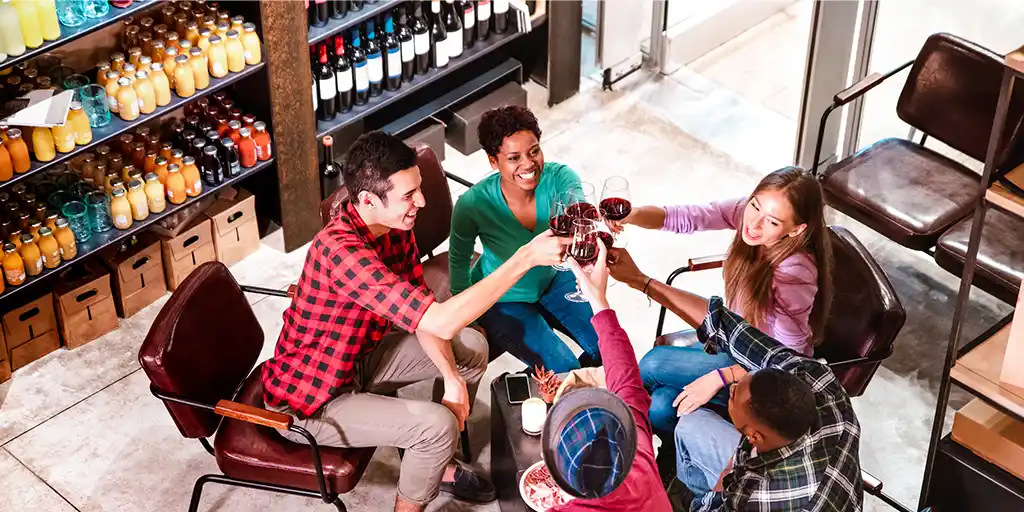
The role of the convenience store is changing. What was once a purely functional space – quick in, quick out – is increasingly becoming something more experiential. Across the UK, stores are evolving into social hubs, blending retail with hospitality, community and culture.
At the centre of this shift is the rise of hybrid retail. Seating areas, coffee offers and informal gathering spaces are no longer reserved for cafés and foodservice, they are finding a place within convenience.

In London, independent stores are beginning to blur the lines between shop and social venue. One of the most talked-about examples is Londis N16 in Stoke Newington, which has built a following not just for its retail offer, but for its in-store food and community-driven events. The store’s supper clubs and freshly prepared food have turned it into a destination, attracting queues and a strong social media following.
This idea of the store as a community anchor is backed up more broadly across the sector. Research shows that convenience stores are increasingly recognised as ‘community hubs’, offering not just products but services and social value, particularly in areas where other local amenities have disappeared[1].

Coffee is playing a major role in this evolution. Adding a coffee offer is no longer just about incremental sales, it is about increasing dwell time and repeat visits. According to the ACS Local Shop Report 2025, the UK’s 50,000 convenience stores are now recognised not just for their retail offer, but as “social hubs, community advocates and service providers”, highlighting how stores are evolving beyond purely transactional spaces[2].
There are also examples of this thinking being built into new store openings. At Sherford in Devon, a newly launched convenience store has been developed alongside an existing coffee business, reinforcing its role not just as a place to shop, but as part of the local social infrastructure.

Beyond commercial opportunity, there is a wider shift towards community retail. Studies highlight that local shops are uniquely positioned to support wellbeing, social interaction and local engagement due to their accessibility and role in daily routines[3].
What this shows is that convenience stores are moving away from purely transactional retail and creating a modern space for people to spend time, not just money.
For many operators, this doesn’t require a full refit. Small changes, a couple of seats, a strong coffee offer, a focus on fresh food, can shift perception quickly. However, if stores have the space, retailers could take this even further, with remote working areas, supper clubs, and more.
[1] The UK Convenience Store Industry: A Snapshot of Smaller Brands and Local Heroes 2024
[2] ACS Local Shop Report 2025
[3] NeighbourlyLab_Understanding the role shops and supermarkets can play in supporting community health and wellbeing_2025